
St. Charles Police Blotter
Start with the St. Charles Parish Sheriff's Arrest Brief archive. Each entry is a dated PDF prepared by the Sheriff's public-information staff. Some briefs cover a single person. Others bundle a weekend or a short stretch of days. Think of them as chosen public statements, not raw exports of every jail transaction.
Older briefs stay posted after someone bonds out, gets released, or moves to another facility. That is what makes the blotter handy for tracing arrests across several days. For current custody, the live roster beats it. A missing brief does not mean no arrest happened. The Sheriff never promises a PDF for every booking.
Search St. Charles Arrest Briefs
Work from the Sheriff's category page down to the PDF itself. Check the archive label and the dates inside the document. Titles do not always carry a name, so keyword and date-range tools beat simple heading scans.
- Open the official Arrest Brief archive and choose “View Most Recent” for a short look-back.
- Choose “View All” or open the general Archive Center for older material.
- Search by name, location, item number, category, or date range when available.
- Open the PDF and note its release date, event date, and item number separately.
- Check the Drug Arrests and DWI Arrests categories when the subject fits those releases.
- Confirm present custody through the Sheriff roster rather than assuming the PDF remains current.
The official Arrest Brief archive is shown below.
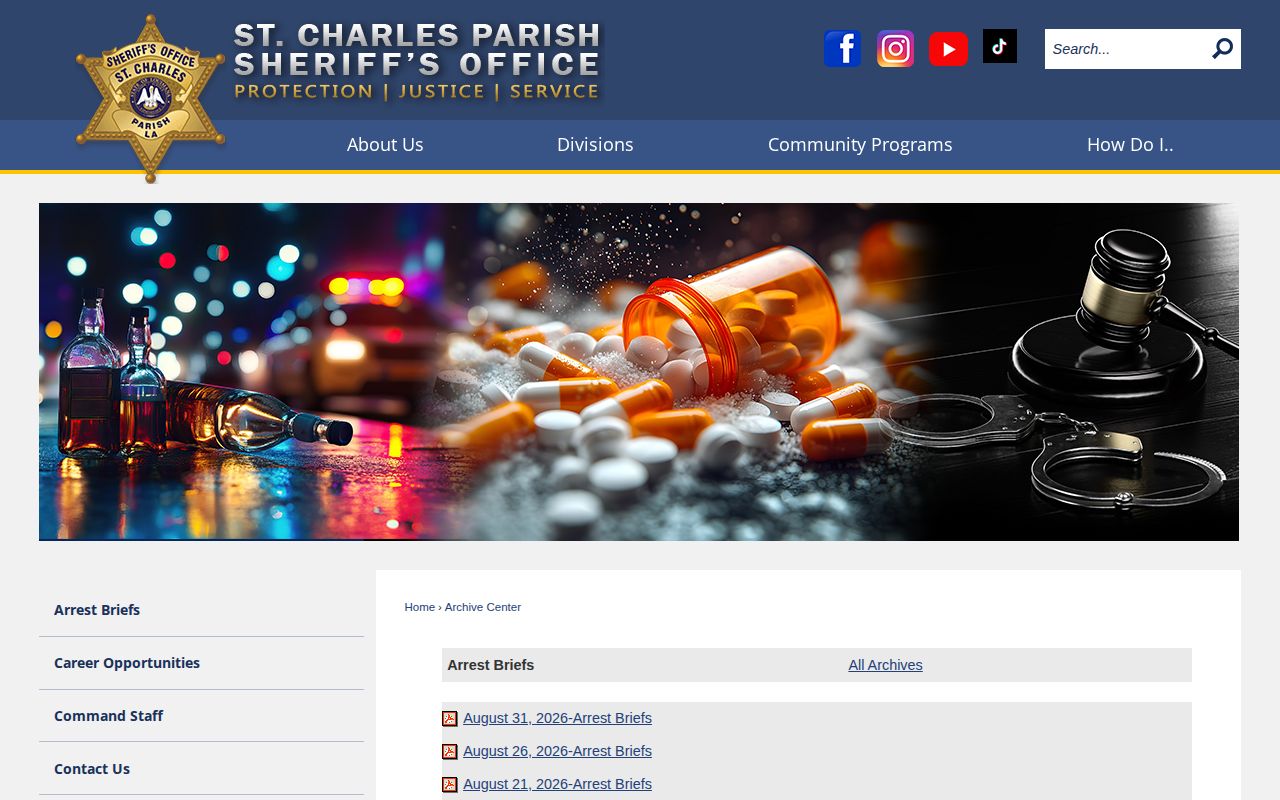
Its dated entries form the parish's clearest official multi-day blotter. The PDFs add the narrative underneath.
St. Charles Blotter Fields
An Arrest Brief packs more story than a roster row. Still, it serves a different purpose. The releases are text-oriented. A brief may not include a booking photo or every field in the Sheriff's booking file.
| Brief field | How to read it |
|---|---|
| Arrestee | The person identified in the selected Sheriff release. |
| Location | The place tied to the event, which may differ from the booking site. |
| Date | The event or arrest date stated in the brief. |
| Item number | A useful identifier for a later records request. |
| Charges | Charges reported at that stage, not a conviction. |
| Narrative | A short agency account, not the complete investigative file. |
| Crime Stoppers | A route for tips, not a direction to confront anyone. |
A brief may mention transport and booking, an outstanding warrant, or a spot anywhere in the parish. Quote the source wording. Court records control any final outcome.
St. Charles Weekend Arrest Reports
Weekday-style posts dominate the archive, but the pattern is loose. Many entries bundle days together. The source holds a June 14 through 16 brief, a June 28 through 30 item, and a May 31 through June 4 span. Those prove multi-day bundles exist. They do not set a fixed weekend schedule.
No official posting time or holiday schedule is published. A weekend arrest might land in a later PDF, surface first on the live roster, or never get its own brief at all. Widen the date range and open each document. For present custody, the Arrests Last 24 Hours workflow is the better first step.
St. Charles Arrest Archives
The archive runs deep, with current and prior-year entries posted side by side. Older records stretch back farther, though the pattern includes gaps, corrected entries, and near-duplicates. Online visibility does not equal the legal retention of a record. A missing PDF might never have been released. It might have moved. It might also require a request to the custodian. The general Sheriff Archive Center offers category, keyword, time-period, and date-range controls.
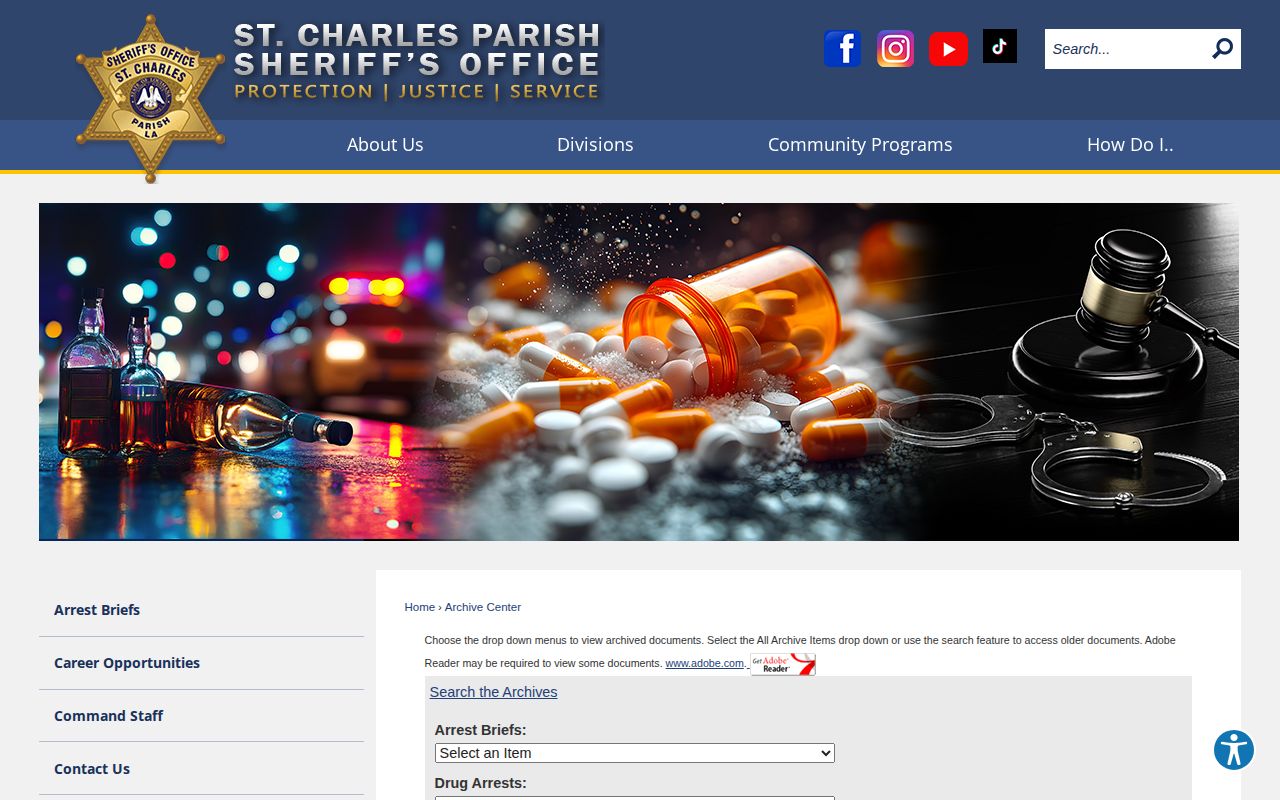
Those controls help separate Arrest Briefs from other Sheriff releases. They also support wider date searches. For the booking record itself, write to the St. Charles Parish Sheriff's Office at P.O. Box 426, Hahnville, LA 70057, or use its in-person Public Records and Legal Affairs route. Give the name, date range, item number, and the exact record wanted. The first local contact is the Criminal Records Division. Call (985) 783-6237. Court outcomes sit with the 29th Judicial District Court and Clerk, not the blotter.
St. Charles DWI Arrest Series
The Sheriff keeps separate Drug Arrests and DWI Arrests archives. That local structure helps. It matters when a specific event was filed under a special category. An item can sit in one series. Then it looks missing from another. So search the general Arrest Briefs and the subject category together. The official DWI Arrest archive holds that series.
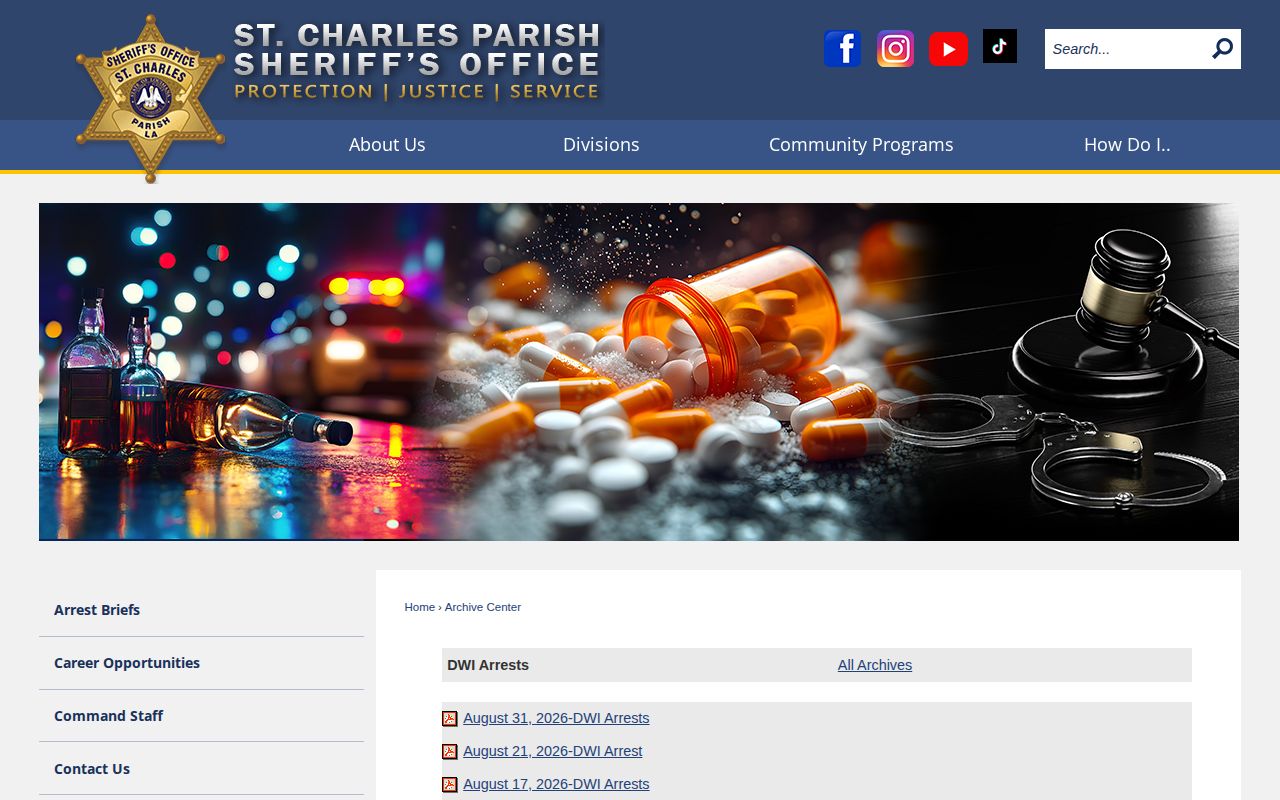
The category view confirms that impaired-driving releases have their own official archive path.
St. Charles Arrest News
The St. Charles Herald-Guide Sheriff's Reports section is the strongest newspaper supplement in the parish. Its reports list selected arrests by date, community, and charge, drawing from Luling, Destrehan, Hahnville, and beyond. Coverage is not complete. Short entries often skip photographs.
Regional outlets chase newsworthy events, not a full blotter. Commercial arrest sites can carry copied or stale entries. Treat all of them as leads. Confirm names, dates, custody, and charges through the Sheriff archive, the current roster, the Criminal Records Division, or the court file.
Verify St. Charles Arrest History
Verification in St. Charles Parish works best in layers. Start with the dated PDF where the Sheriff posts each Arrest Brief. If that brief is missing, turn to the booking record itself. The record offers more depth. The 29th Judicial District Court file comes next. It shows what actually followed the arrest. From the Clerk's docket you may pull a case number, defendant name, and charge description. Hearing date and proceeding type appear there too. Want a certified file? Only the Clerk can issue one.
Louisiana retention rules do not turn the public website into a permanent archive. Someone released from custody may drop off the live roster. The Arrest Brief stays posted. Retention schedules, case needs, lawful exemptions, and court orders all shape what remains public. So never assume an absent page was destroyed or expunged. Get an answer from the custodian or an expungement order first.
When the Sheriff cannot locate an old item, ask which approved retention schedule applied. Also ask whether it moved to another storage system. Louisiana State Archives belongs at the end of that road. Contact it only if the custodian confirms an archival transfer. It never replaces starting with St. Charles Criminal Records.
Check St. Charles Court Records
The Sheriff archive also keeps Incident Briefs and Media Releases apart from arrest-specific categories. Search those when the question involves a wider event or an agency statement. Match the item number and official record. Only then tie an incident narrative to a person's booking history. A report can name people in an investigation. It may not show that each one was arrested.
For court follow-up, the St. Charles Clerk of Court sits at 15045 River Road in Hahnville. The phone is (985) 783-6632. Treat the public docket as a starting point. The Clerk supplies authoritative copies. Ask for the case tied to the person and item number when you can. That habit keeps an old blotter charge from being mistaken for the case's final outcome.
St. Charles Blotter Source Order
Keep official sources in a fixed order. The Sheriff's Arrest Brief and its category archives come first. Check the current roster only for present custody. Then ask Criminal Records for the booking or initial report. Finish with the Clerk for the court outcome. This sequence keeps a news summary from overriding the custodian's own record.
The Herald-Guide can help you pin down a date or a community name. Still, it is a news source. Regional reports and commercial pages are even more selective. They may repeat an early charge long after the official case changed. Save the official item number and verify any conflict at its source.
St. Charles Blotter Photo Scope
Not every Arrest Brief carries a booking photograph. These PDFs are mostly text releases. Under Louisiana law, qualifying public photos appear through the current roster instead. For an identified older booking, ask the Sheriff's records custodian whether a photo may be released. Note: the published photo fee is not an unconditional release promise.